engage the Seeds someone planted in you?
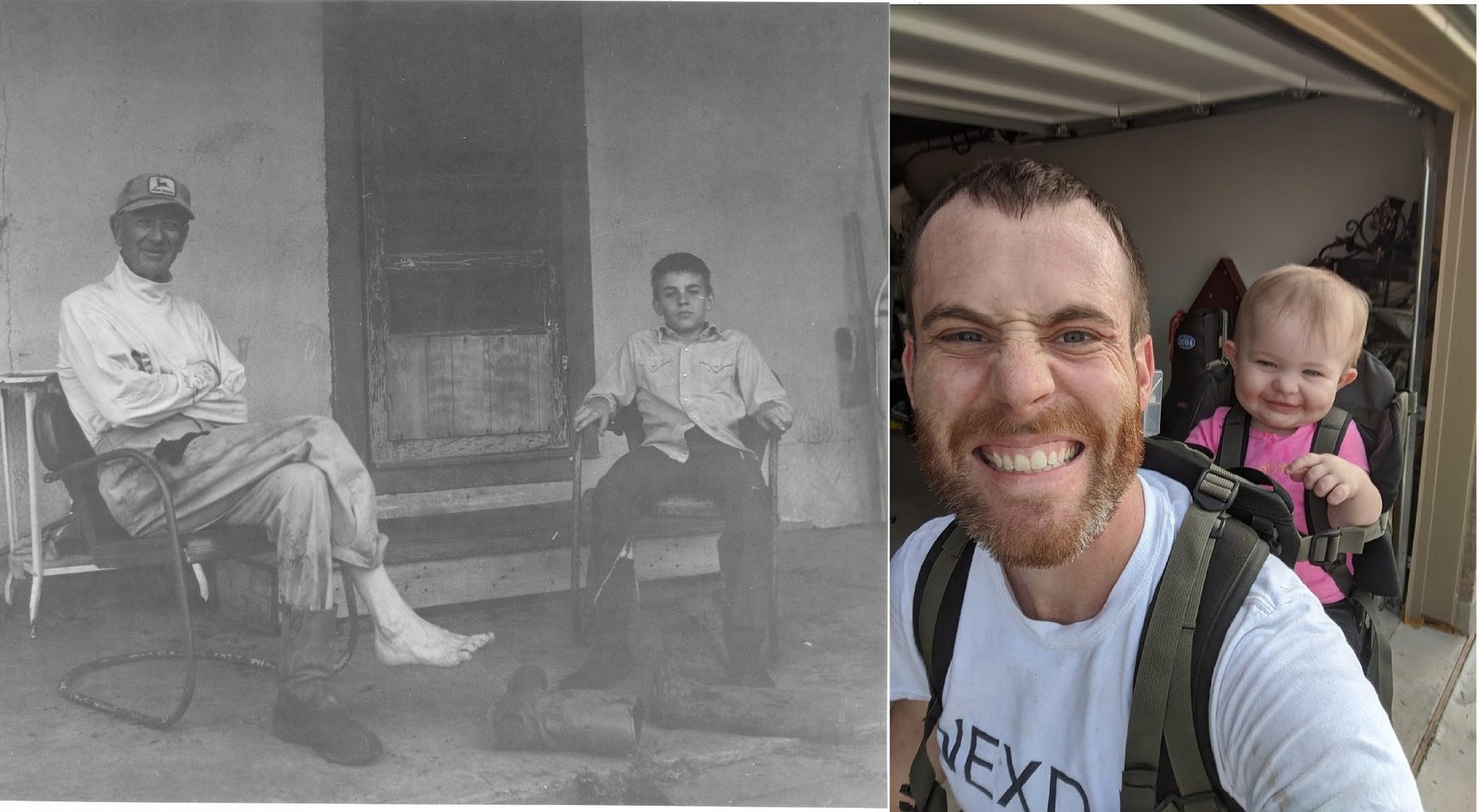
2 men who could not have been less alike…
I found out at his funeral… my grandfather… the youngest of 12 was a natural comedian. Seventy-odd years of pranks came spilling out of people who knew him his whole life, and I stood there thinking, I never saw 1 minute of that. To me, he was a white shirt and a tie, every day, no exceptions. He worked through the Depression for the Post Office and we only recently discovered he had been leasing trucks back to them on the side, alongside the rabbits I did know about. His garden was something to marvel at… as were his Seeds…
Archie was my Mom’s dad and he was the opposite in every direction. He wore clothes 5 sizes too large, on purpose, so that if he ever got caught in a piece of farm equipment they would come off quickly. He had moved his family through the Depression on work for the Department of Agriculture before he landed a professorship. He would pull the car over at any moment, walk into a field, and start examining whatever you had asked him about. Nothing was ever a lecture. It was always, come look at this with me.
…who engaged your Seeds?
Riley B. King was born on 16 September 1925 on a cotton plantation near Itta Bena, Mississippi. His parents separated when he was 4 and he went with his mother to Kilmichael. She died when he was 9. In his own words, “My mom died when I was nine, and I lived alone from the time I was nine until I was 14.” His grandmother Elnora raised him until she died in January 1940. By 14 he had buried the 2 people who were supposed to raise him…
… the man who changed the direction of that life was not a talent scout. He was a preacher. Another Archie… Reverend Fair was Church of God in Christ, and he was family by marriage, the brother-in-law of Riley’s uncle. He played a Sears Roebuck Silvertone. When he came around, he let the boy hold the guitar and showed him 3 chords.
3 chords is the whole intervention
That is the whole intervention. Not a scholarship, not a plan, not a conversation about potential. He handed a 9 year old the instrument and put his fingers where they went: come and look at this with me… King’s own summary of the man, decades later, is 6 words: “I liked him because he played guitar.”
His employer, Flake Cartledge, bought him his first guitar for 15 dollars and took it out of his wages over 2 months. Nobody gave him anything. Somebody sold it to him on terms, which for a boy with no parents is a form of respect, and he paid for it with his own work. By 1951 he was on the radio in Memphis. WDIA had hired him in late 1948 as a disc jockey, and one of the records he played hard was Lowell Fulson’s Three O ‘Clock Blues. He was Beale Street Blues Boy on air, which shortened to Blues Boy, which shortened to BB…
A borrowed room, a piano, and 5 weeks at number 1
Then, in September 1951, he cut his own version. Not in a studio with a label behind it. In a room at the Memphis YMCA, with Ike Turner on piano. It was released that December, entered the chart on 29 December, went to number 1 on 2 February 1952, and stayed there 5 weeks out of the 17 it spent on the chart. The disc jockey stopped being a disc jockey.
This September is 75 years from that session. No source gives the day, only the month… and the month gives us is enough: a 26 year old with a day job walked into the borrowed room he could get, with the equipment he could get, and made the record that ended the day job.
Nobody is ready to engage… until you step in…
I have had an extraordinarily blessed life, and I spend real time on gratitude for the people who handed me things along the way. There is emerging proof in brain science that the stance of gratitude does not only serve the person you are remembering … it improves your own stance. You start to see things more positively, and you start looking for the way to turn the dark thing into a lighter one. My grandfathers did exactly that, in one of the darkest seasons this country has had, with little ones looking up at them asking what happens next…
… before they look ready
Someone handed you the guitar, showed you the 3 chords, rented you the room… Give someone the real work before they look ready for it. Not a stretch assignment with a safety net under it and 3 checkpoints. The actual thing. The customer conversation you always take. The board slide you always write. Hand it over and show them 3 chords.
Picture the last person on your team who asked you, in that careful voice, whether there was anything else they could be taking on. You said you would think about it. You are still thinking about it, and they have stopped asking. That is the whole loss, and it happened in a hallway in about 11 seconds.
“Come look at this… with me…”
Your “Simple… Not Easy” move: name 1 piece of work that is yours today, hand it to 1 person this week, and show them the 3 chords instead of the 30.”Come look at this with me… “
I spent a long career being the person who could do all of it, and it cost me more than it bought me. Helping leaders find the 1 thing to let go of first is most of what I do now. Schedule time with me here.
Somebody once loaned a 26 year old a room. 5 months later the day job was over, and it started with Three O’Clock Blues.