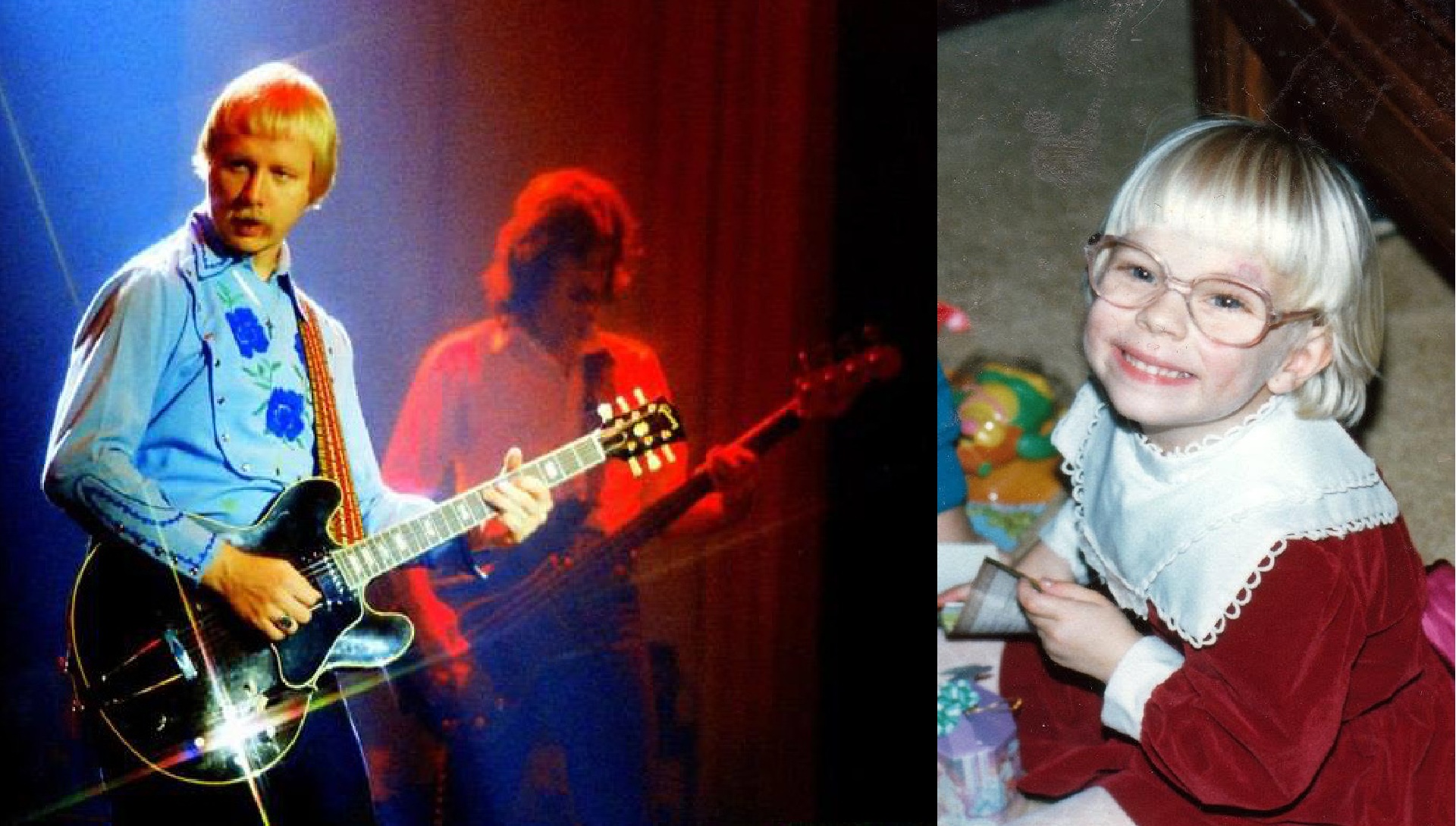
“Dad is a few 2 or 3?”
… 1985, we were in Friendswood in our first house. There is a story of my daughter at 3 asking repeatedly to help her do something … and me through the early morning haze saying “in a few minutes”… a few Times… hearing her say “Dad is a few 2 or 3?”
…the words you say most at home…
“In a minute.” “Let me just finish this.” “I’ll be right there.” You say them kindly, and you mean them when you say them. Then the email turns into a reply, the reply turns into a call, and the minute turns into an hour. Everyone who loves you has learned exactly what your “few minutes” is worth. They have done the math on your Time, and they did it years ago.
At work you would never run a project this way. A deliverable has a date, a status has a color, and a slipped date gets a conversation. At home the most important promises you make have no number on them at all.
…the songwriter who managed to get home…
Kerry Livgren joined the band in early 1973. He wrote most of Leftoverture, and in the middle of it he came home from a tour to a daughter who was 3. In his words, if he missed out on that, there was no second chance.
He became a Christian on the road in 1979, left the band after a last show on New Year’s Eve 1983, and had a very successful Christian Rock career. We actually saw him play on tour in the 80’s. He had a stroke in 2009. He came back to the stage in pieces: a guest spot in 2013, the encores in Topeka in 2024, and in September 2025 a night in Bonner Springs joining the encore of Carry On Wayward Son with the band again.
A Time you name is a promise. A few minutes is a wish.
…what it takes to manage a promise…
To manage is to make sure the right people have the right information when they need it. For the people at home, the information they need most is when. A number does what a few minutes cannot: it gives them something to plan around, and it gives you something to keep. Even a large number works, as long as it is real.
The trap is the vague yes. It feels generous to say “soon”, and it costs nothing in the moment. It costs later, whenever soon turns into never, and the person waiting quietly stops asking. Your team does the same arithmetic. A leader who says “I’ll get back to you this week” and gets back in 3 teaches everyone to add 2 weeks to whatever you say, and to stop bringing you anything that cannot wait.
…a song he almost kept to himself…
Dust in the Wind started as a guitar warm up finger-picking exercise. Livgren did not think it was a Kansas song, and he played it at home until his wife heard it. In his telling, she said to give it a try anyway, and several million records later, he guessed she was right. When he finally played it for the band, he warned them they probably would not like it. Phil Ehart said it blew them away.
It came out as a single in January 1978 and reached No. 6 in April, the only US Top 10 the band ever had. Livgren said it was a song about the transitory nature of our physical lives. In January 2011, 16 months after his stroke, he stood in front of a university orchestra and conducted it.
…how I learned to manage the few…
A 3-year-old taught me the first rule of status reporting, and her daughters are teaching it to her now. It was the beginning of her constantly nailing down details that I did not provide. She is now the mother of 2 girls who are constantly “Time checking” her on details, in a quiet return of her own questions to … her…
Say the number. Then keep it, or say a new one before the old one runs out. The number does not have to be small. “After this call, about 20 minutes” is a promise a 3-year-old can hold you to, and so is a direct report waiting on a decision.
Your “Simple… Not Easy” move: Give every “in a few minutes” a number this week: when someone asks for your Time, name the minute and keep it.
If you find the numbers keep slipping, and you want to work out why, let’s manage it together. Schedule Time with me here.
Name the minute, keep it, and watch how fast the rest of it blows away like… Dust in the Wind